Our partners are crucial to our work and help us in various ways. We collaborate with a range of organisations and individuals who share our passion for sustainable craft and ethical practices. Some of our partners and a brief of the work we have been doing with their support has been noted below.
The Eicher Foundation
We are working to expand our operations in the Kangra Valley with generous support from Eicher Foundation. We have been able to start engaging with women artisans in 9 villages under the aegis of this project. More than 60 spinners have started working with us and we soon plan to expand our operations and include knitting and weaving in the valley. We have also been able to identify promising young women who, we hope, will form the foundation of our operations in Kangra Valley.
Nila House
One of the highlights has been our collaboration with Nila House and Jagada Rajappa to train our artisan clusters in the beautiful art of natural dyes. This initiative is already showing results—our products now carry richer, more vibrant hues that reflect both tradition and innovation.
The British Council
We have been working on a project supported by the British Council that advances traceability in India’s wool sector by developing user-friendly digital tools, training programs, and standardised data systems. It also supports pastoralist inclusion, and promotes Indian wool globally as a sustainable, high-quality alternative through innovative, scalable solutions addressing supply chain fragmentation and digital access challenges. The tools, systems and processes developed as a result of this project will help our customers traces their products to the Spinners, Herders, Knitters, Dyers, Weavers and all people engaged in allied activities. This will help them verify the authenticity of the product as well as help develop a deeper connection with woollen that have come to own and use.
Forbes Foundation
In 2022 we were awarded a Forbes Grant which enabled us to scale operations, increase artisan income multi-fold, and expand from training from 9 to 65 artisans across villages. The grant also allowed investments in tools, training, and design collaborations which improved efficiency, leadership, and product diversity. All of this also helped us enter new markets and expand our reach in both B2B & B2C segments.
Other Partnerships
We also have marketing and sales partners located across the globe: in places like Amsterdam, Japan, Australia, the USA, and Delhi. These partners are connected to us through our sister organisation, Kullvi Whims which is a social enterprise based in Naggar. We work with socially conscious organisations who assist us in reaching a wider audience for our handspun and handwoven products, allowing us to focus on the intricate work of crafting.
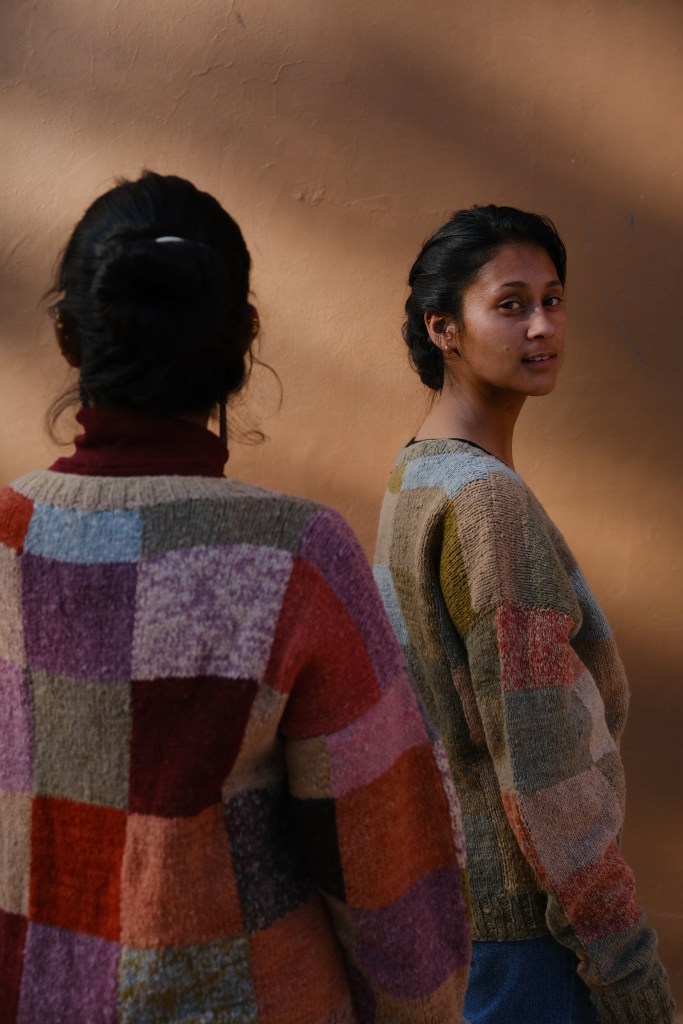
We also engage in collaborations with other creative enterprises, such as Zazi Vintage. These relationships help to tell the stories behind our craft and connect us to a global sisterhood of artisans and ethically-minded brands.
Looking into the future, we aim to partner with clients and organisations to build traceability systems for our products and work with those creating relevant marks and certifications to further our sustainability goals. We also target building relationships with B2B markets as well as luxury markets and export houses.
We are exploring partnerships with universities, design schools, and sustainable fashion organisations to promote our internship programme, which helps to share our knowledge and values with a new generation.We are a part of the Desi Oon Hub Collective. In its own words “Desi Oon hub, a loose collaborative of organisations from across the country’s pastoral landscapes, that work with shepherds, knitters, felters, spinners, weavers to bring indigenous wool into our lives, homes and wardrobes. The Hub is growing as a space for collaborative action, research, experimentation and learning; and for celebrating the richness of the fibre through promotional campaigns and events. Together, an energetic group of civil society organizations, research institutions, rural communities, government agencies, technologists, entrepreneurs, designers, and interested citizens are building a nourishing ecosystem for Desi Oon – Hamara Apna.“
Our partners play a vital role in supporting our mission to empower Himalayan artisans and promote sustainable practices in the textile industry.
 kullucraftheritage.org